


Main photo: ©Sipa US / Alamy Stock Photo
One of two martial arts in the Paralympics, judo combines tactical skill strength and decisive movement.
The rules are the same as in Olympic Judo, only the two fighters start gripped up. Each competition is categorised based on weight and severity of visual impairment. Judoka are categorised as J1 (blind) or J2 (visually impaired) and compete in the following weight categories:
Contests take place over four minutes with scores of varying degrees awarded for throws, holding techniques or submissions with judoka scoring the coveted ippon to end the contest.
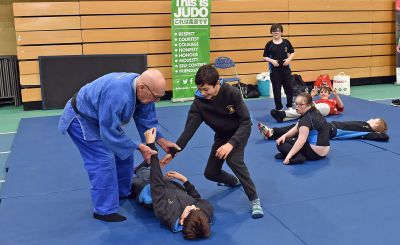
Photo: Participants have fun taking part in judo practice at insport Series: Cardiff
To find out how to start participating in Judo you can refer to the DSW club finder or visit the Judo Wales Website.
National Governing Body for Judo in Wales:

insport NGB Standard: Bronze Learn more about insport NGB
For more information about coaching and volunteering, please Contact Us.
There are pathways that lead to:
 Paralympic Games
To find out what your potential is and and for guidance in competitive pathways, please complete the Disability Sport Wales #inspireform.
Eligible Impairments: visual impairment.
Para judo is for athletes with vision impairment, though unlike many of the other sports for athletes with vision impairment, it has its own sport-specific classification system. For judo, vision is assessed in a binocular fashion, meaning both eyes together. Athletes are also grouped into different weight categories within their Sport Class.
Sport Class structure:
J1: for athletes with no to very low visual acuity (LogMAR greater than 2.6).
J2: for athletes with visual acuity between LogMAR 1.3-2.5, or visual field of 60 degrees or less in diameter.
You can find out more about the eligible impairment types in Para Judo here

Disability Sport Wales is able to influence, include and inspire in sport with the support of our fantastic partners.

SPAR UK (AF Blakemore Ltd.)






The Cynnig Cymraeg (Welsh Offer) is the official recognition of the Welsh Language Commissioner and is given to organisations that have supported the Commissioner’s long-term plan to ensure people can use the Welsh language in all aspects of their lives, in all parts of Wales. Disability Sport Wales was awarded this certification in June 2024. Read more about our Cynnig Cymraeg (Welsh Offer).





These options options adjust the visual layout of disabilitysportwales.com. If you are using a screen reader, these options will not change your experience, and you may wish to close this Accessibility Options panel and continue browsing the site.
Select an option:
Select an option:
Please select your preference:
You may optionally select to view this website in Lato or Atkinson Hyperlegible.
Please select your preference:
You can choose to minimise the use of capital letters for headings and sub-headings if you find them easier to read in Sentence Case. Some text, including acronyms, may still be shown in capital letters.
Please select your preference:
This site sometimes uses animation to bring the content to life. If you'd like to disable this, you can do.
Please select your preference: