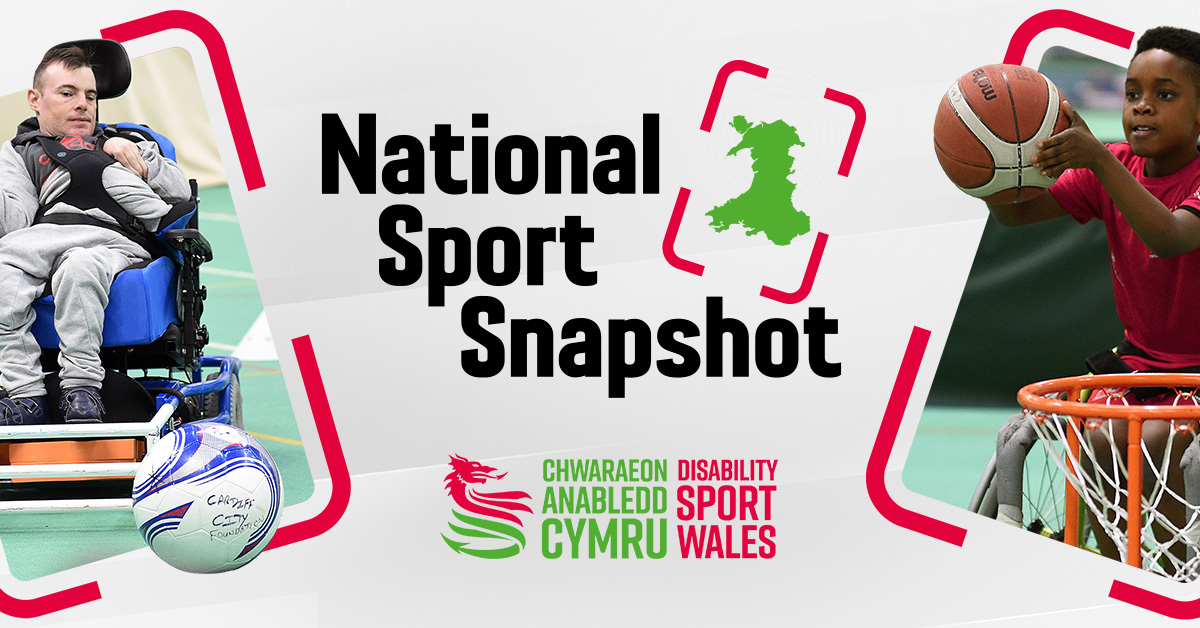





Participation figures were gathered from 171 clubs and sessions on the number of disabled people who participated in physical activity and sport from January 2025 to December 2025. There was a total of 3,278 participants who were reported to have participated in physical activity and sport over the last 12 months.
The National Sport Snapshot Survey has highlighted that disabled people who have additional intersecting factors have reduced levels of participation and involvement within community sport and physical activity. This means that disabled Welsh speakers, disabled people from ethnically diverse communities, disabled people identified as LGBTQI+, and disabled females are less likely to participate or be a part of the disabled workforce.
The key findings from each of the four themes within the National Sport Snapshot are detailed below.
Of the workforce 21% were disabled compared to 79% who were non-disabled. This is an increase of 6% in the disabled workforce since the 2024/25 report. This finding aligns with the ONS Census 2021, that identified that 21% of the working age population (16 to 64 years) were disabled. The ONS Disability and social participation report (2018) also identified that disabled people are just as likely as non-disabled people to have volunteered. However, it was found that disabled people feel that there are fewer opportunities for them to volunteer in sport, especially for those who feel their disability limits them a lot (ONS, 2018).
When considering the intersectionality of disability and ethnically diverse communities only 2.4% were a part of the inclusive physical activity and sport workforce, which is a significantly lower figure than the 13% working age population who are disabled and from an ethnically diverse community found by the ONS Census 2021.
Similarly, the number of disabled people who speak Welsh within the workforce was only 8.8% which is considerably lower than the 12% of disabled people who are Welsh speaking within the working age population reported by the ONS Census 2021.
To further develop this area Disability Sport Wales are working in partnership with WCVA to better understand the disabled people's experiences of volunteering within physical activity and sport, and how it can be improved.
The National Sport Snapshot showed that only 37.5% of the disabled participants were female. Although, this percentage is a 6.5% increase from the last report in 2024/25, it still highlights that there is a disparity between the number of disabled male participants and disabled female participants who are engaging in community physical activity and sport.
Inequality in sport is compounded for disabled females. Their disability combined with the gender stereotypes create more barriers and fewer opportunities for disabled females (Carr, Atkin, & Milton, 2025).
Within the National Sport Snapshot there was a clear decline in participation for all three genders within the over 60s category. Just 9% of the disabled males participating in physical activity and sport were within the over 60s category. This level of participation was only slightly higher for the disabled female (10.2%) and for disabled others (15.5%).
Disabled people over 60 often face a number of disability focused and age-related barriers to accessing physical activity and sport. Therefore, targeted initiatives need to focus on supporting disabled over 60s to access more physical activity and sport.
Welsh speakers accounted for 12% of the participants within the 2025 National Sport Snapshot Survey. This figure was notably lower than the 17.8% of the population who are Welsh speaking across Wales in the 2021 Census. As such, there is a need to develop the number of clubs and sessions who offer sessions in Welsh and better support Welsh speakers to access physical activity.
Similarly, the number of individuals identifying as LGBTQI+ was only 2%, which is well below the 12.6% of the disabled population who identified as LGBTQI+ in the 2021 Census. This highlights the need for more targeted engagement strategies within the disabled LGBTQI+ community.
The participation figure for disabled individuals from ethnically diverse communities although has slightly increased, since the last National Sport Snapshot Survey in 2024/25, to 6%. However, this figure is below the disabled participation from ethnically diverse communities seen during the Get Out Get Active (GOGA) project.
Further details of the National Sport Snapshot findings can be found in the full report. A link to which can be found below.

Disability Sport Wales is able to influence, include and inspire in sport with the support of our fantastic partners.

SPAR UK (AF Blakemore Ltd.)






The Cynnig Cymraeg (Welsh Offer) is the official recognition of the Welsh Language Commissioner and is given to organisations that have supported the Commissioner’s long-term plan to ensure people can use the Welsh language in all aspects of their lives, in all parts of Wales. Disability Sport Wales was awarded this certification in June 2024. Read more about our Cynnig Cymraeg (Welsh Offer).






These options options adjust the visual layout of disabilitysportwales.com. If you are using a screen reader, these options will not change your experience, and you may wish to close this Accessibility Options panel and continue browsing the site.
Select an option:
Select an option:
Please select your preference:
You may optionally select to view this website in Lato or Atkinson Hyperlegible.
Please select your preference:
You can choose to minimise the use of capital letters for headings and sub-headings if you find them easier to read in Sentence Case. Some text, including acronyms, may still be shown in capital letters.
Please select your preference:
This site sometimes uses animation to bring the content to life. If you'd like to disable this, you can do.
Please select your preference: